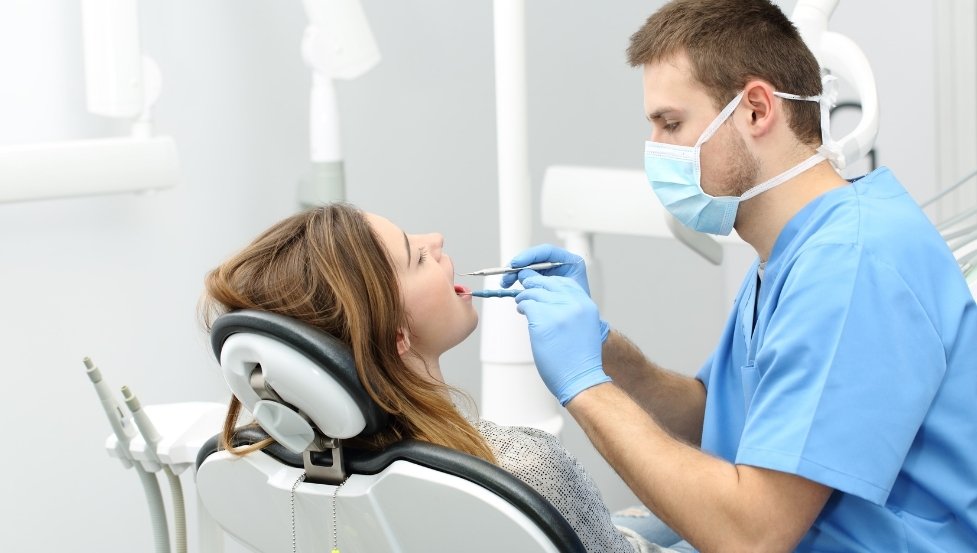


A cracked tooth won’t heal on its own, and waiting makes it worse. See what’s at stake and find an emergency dentist in Phoenix at Dental Home Family Dentistry.
A cracked tooth doesn’t always announce itself loudly. Sometimes it’s a sharp jab of pain when you bite down on something firm. Other times, it’s a vague sensitivity to cold that comes and goes, easy enough to dismiss as nothing. That’s the problem – cracked teeth are deceptively easy to ignore, right up until they’re not.
Here’s what most people don’t realize: a crack in a tooth is not a static problem. It moves. It deepens. And the longer you wait, the more the situation changes, usually not in your favor.
Why Cracked Teeth Don’t Stay the Same
Teeth endure enormous pressure every day. Chewing, clenching, grinding – even normal biting force creates stress on enamel. A crack disrupts how that force distributes across the tooth. Instead of spreading evenly, pressure concentrates at the fracture line, which gradually widens it.
This is why a hairline crack that causes only occasional discomfort can become a full vertical split within months. And a tooth that splits to the root is fundamentally different from one with a small, treatable fracture. The treatment options change significantly, and so does the likelihood of saving the tooth.
For patients who connect with an emergency dentist in Phoenix early, a cracked tooth is often manageable, often with a dental crown, bonding, or targeted treatment, depending on the location and depth of the crack. The earlier the visit, the more options are on the table.
The Progression Nobody Wants to Experience
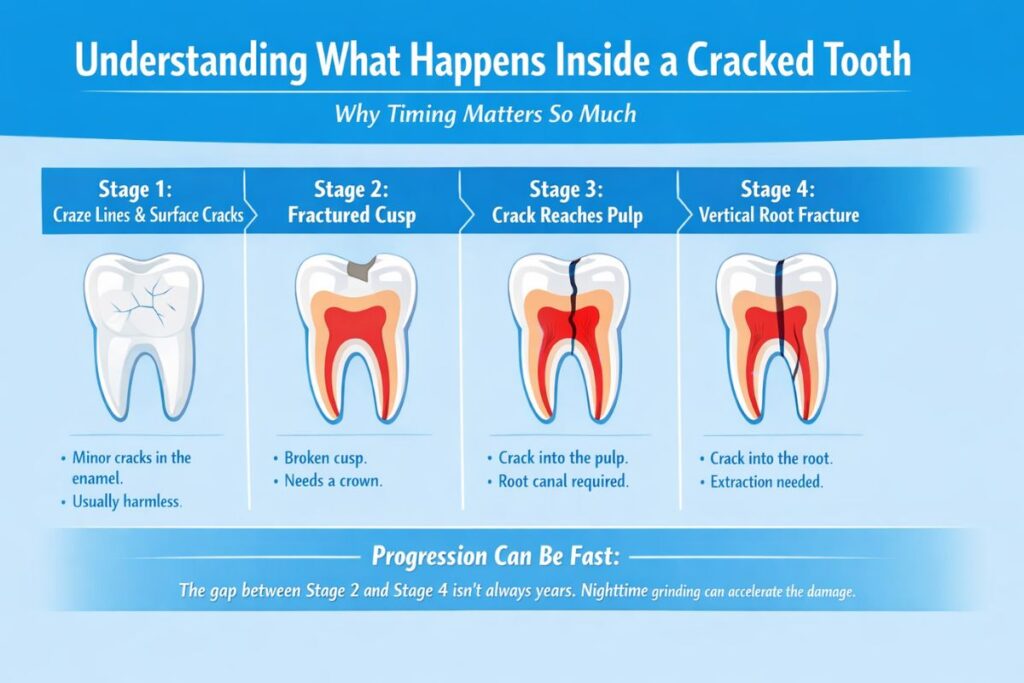
Understanding what happens inside a cracked tooth explains why timing matters so much.
Stage one: Craze lines and superficial cracks. These affect only the outer enamel layer and are the least serious. Many adults have them and never experience symptoms. They rarely require treatment beyond monitoring.
Stage two: Fractured cusp. This involves a piece of the chewing surface breaking away. It can be sharp and uncomfortable, and it typically needs a crown to restore full function. At this stage, the crack usually does not affect the pulp (the soft tissue that contains nerves and blood vessels).
Stage three: Crack reaching the pulp. Once the fracture extends into the pulp chamber, bacteria follow. The pulp becomes inflamed and eventually infected. At this stage, you may feel persistent pain, notice sensitivity that lingers long after the trigger is gone, and experience spontaneous aching. At this point, your dentist usually performs a root canal to remove the infected tissue before restoring the tooth.
Stage four: Vertical root fracture. A crack that runs down into the root is the most serious scenario. These fractures often have subtle symptoms for a long time, making them harder to catch. When dentists discover them, they frequently recommend extraction as the only viable option.
The gap between stage two and stage four isn’t always years. For someone who grinds their teeth at night that progression can move faster than expected.
What Ignoring It Costs You
Beyond the tooth itself, an untreated crack carries consequences that ripple outward.
A cracked tooth that becomes infected doesn’t stay a minor problem. Dental infections can spread to surrounding teeth, the jawbone, and in serious cases, soft tissue in the neck and face. Dental abscesses (pockets of infection at the tooth root) occasionally require hospitalization when they spread. This isn’t meant to alarm you unnecessarily, but it is the clinical reality of untreated dental infection.
There’s also a practical reality: what a dentist could have saved with a crown can turn into a tooth that requires extraction and replacement. Whether that means a dental implant, bridge, or partial denture, the treatment is more involved, takes longer, and requires more of everything – time, appointments, and recovery.
Catching the crack early isn’t just about the tooth. It’s about not letting a fixable problem become a complicated one.
Signs a Cracked Tooth Needs Attention Now
Not every crack produces dramatic symptoms. That said, certain signs should prompt you to call your dentist the same day rather than scheduling something weeks out:
- Pain when biting or chewing, particularly on one specific spot
- Sensitivity to temperature that lingers after the cold or heat is gone
- Intermittent pain that’s hard to pinpoint comes and goes with no clear pattern
- Swelling around the gum line near a specific tooth
- A visible line, chip, or rough edge that you can feel with your tongue
Any combination of these warrants a prompt evaluation, especially the first two. Lingering sensitivity to hot or cold temperatures often signals that the crack has already reached the pulp.
Don’t Give a Crack Time to Get Worse
A cracked tooth, when treated early, is a manageable dental problem. A cracked tooth left alone is a dental emergency in progress.
Call Dental Home Family Dentistry in Phoenix today and get your tooth evaluated before the situation changes. Same-day appointments are available because some things really shouldn’t wait.
People Also Ask
Q: Can a cracked tooth heal on its own?
No. Unlike bone, tooth enamel and dentin don’t regenerate. A crack will not close or repair itself, it can only stay the same or worsen over time. The only way to stop a crack from progressing is professional treatment, typically a crown, bonding, or, in more advanced cases, a root canal or extraction.
Q: How does a dentist diagnose a cracked tooth?
Cracked teeth can be surprisingly difficult to detect, particularly vertical fractures. Dentists use a combination of visual inspection, dental probing, bite tests (having you bite down on a specialized stick to isolate pain to a specific cusp), X-rays, and sometimes dental dye or transillumination – shining a bright light through the tooth to reveal fracture lines that aren’t visible to the naked eye.
Q: Can I eat normally with a cracked tooth?
It’s best to avoid putting pressure on the affected tooth until it’s been evaluated and treated. Stick to softer foods and try to chew on the opposite side. Hard, crunchy, or chewy foods can deepen the crack or cause a piece of the tooth to break away, which turns a manageable situation into a more urgent one.
Q: Will a crown fix a cracked tooth completely?
A crown covers and protects the visible portion of the tooth, holds the crack together to prevent it from spreading further, and restores normal chewing function. However, if the crack has already extended into the pulp or root before the crown is placed, additional treatment, such as a root canal, may still be needed. A crown treats the structural problem; it doesn’t reverse damage that’s already reached the nerve.
Q: Is a chipped tooth the same as a cracked tooth?
Not exactly. A chip involves a piece of the tooth breaking off – it’s a loss of tooth structure. A crack is a fracture line that may or may not result in a piece breaking away. Chips are usually visible and obvious; cracks can be invisible to the naked eye. Both need professional evaluation, but cracks are often the more serious concern because of how they can deepen and spread without obvious symptoms.