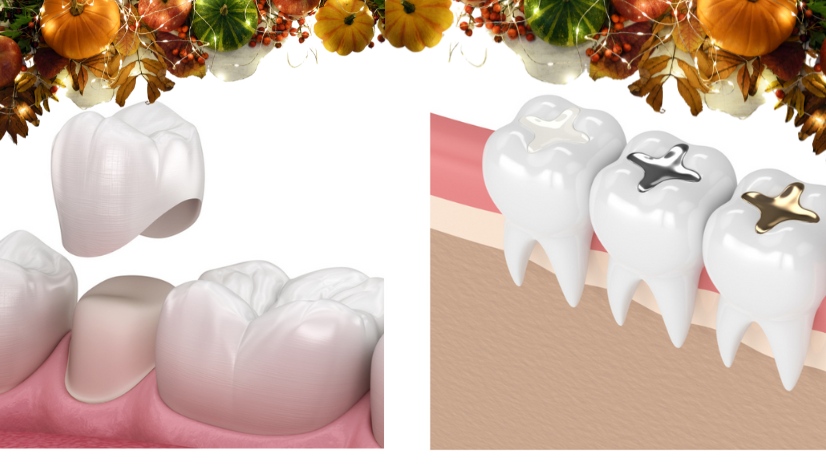


Silver fillings aren’t always a problem, but they can be. Learn when to replace them with dental fillings in Phoenix at Dental Home Family Dentistry.
Those dark spots on your back molars have probably been there for years or decades. You know they’re old amalgam fillings, and somewhere along the way, you’ve wondered whether it’s time to swap them out for something tooth-colored. It’s a reasonable question, and the answer isn’t a simple yes-or-no.
Replacing silver fillings with composite resin is one of the more frequently asked-about procedures in general dentistry right now. Some people pursue it for cosmetic reasons. Others have real concerns about the materials. And some are told by their dentist that a filling genuinely needs to go. Sorting out which category you’re in makes all the difference.
What’s in a Silver Filling
Amalgam fillings, also called silver fillings, consist of an alloy that combines metals such as silver, tin, copper, and mercury. Yes, mercury. That’s the part that makes people understandably uneasy.
Here’s the right picture: the mercury in dental amalgam is bound to other metals in a stable alloy. It’s not the same as liquid mercury or methylmercury. The FDA, the ADA, and the World Health Organization have all concluded that amalgam fillings are safe for most adults. The mercury in a set filling doesn’t leach into your system the way the raw element would.
That said, the FDA updated its guidance in 2020 to recommend that pregnant women, children under six, people with kidney impairment, and those with amalgam allergies avoid new amalgam fillings when possible. If you fall into one of those categories, that’s a conversation worth having with your dentist about dental fillings in Phoenix and what options make the most sense for your situation.
When Replacing an Old Filling Makes Clinical Sense
The best reason to replace an amalgam filling isn’t aesthetics – it’s function. Amalgam expands and contracts with temperature changes over time. Phoenix’s dramatic daily temperature swings, moving between scorching outdoor heat and heavily air-conditioned interiors, accelerate that cycle. After years of thermal stress, the margins of an old filling can pull away from the tooth wall, creating microleakage, tiny gaps that allow bacteria to enter and cause new decay beneath the filling.
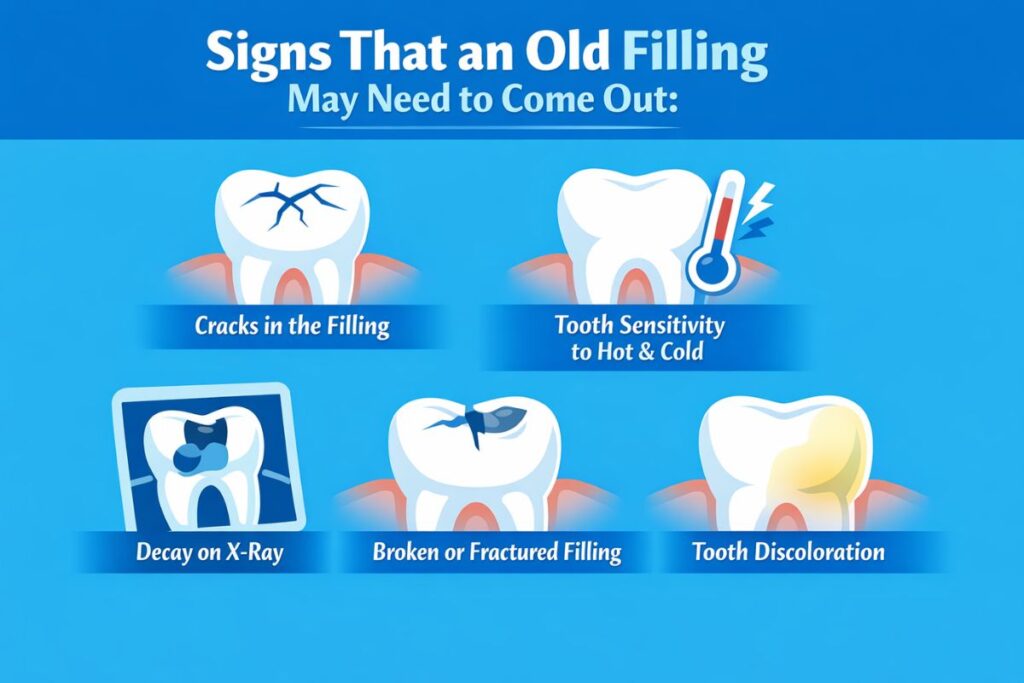
Signs that an old filling may need to come out:
- Visible cracks in the filling or the surrounding tooth structure
- Sensitivity to temperature that wasn’t there before
- Recurrent decay was detected on X-rays beneath or around the filling
- A broken or fractured filling edge that you can feel
- Discoloration spreading into the surrounding tooth enamel
The Composite Advantage Worth Considering
Where composite genuinely outperforms amalgam is in its ability to bond to your tooth. Amalgam does not chemically adhere to the tooth, so the dentist holds it in place mechanically and removes more healthy tooth structure to create a shape that locks the material in. Composite bonds directly to enamel and dentin, allowing for a more conservative preparation that preserves more of your natural tooth.
For smaller cavities or replacements in visible areas, composite is the better choice on multiple fronts – appearance, bonding, and preservation of tooth structure.
Dental fillings in Phoenix at Dental Home Family Dentistry cover both amalgam and composite options, with recommendations based on what actually serves the tooth, not on trends or unnecessary treatment.
Old silver fillings don’t necessarily need to be removed. But some of them genuinely should — and knowing which is which requires a real exam, not a guess. If you haven’t had your existing fillings evaluated recently, or if you’re noticing sensitivity, visible cracking, or just want a clear picture of where things stand, that’s worth a conversation.
Book an appointment at Dental Home Family Dentistry in Phoenix today and find out whether your old fillings are holding strong or quietly working against you.
People Also Ask
Q: Does removing an amalgam filling release mercury vapor?
There is a brief release of mercury vapor during the drilling process of amalgam removal. Most dentists who routinely remove amalgam use protocols to minimize exposure – rubber dams, high-volume suction, sectioning the filling into chunks rather than grinding it down, and sometimes having patients breathe through their nose rather than their mouth during removal. If this is a concern for you, ask your dentist what protective measures they use.
Q: Can I get composite fillings on my back teeth, or only front teeth?
Composite resin is used on both front and back teeth. It’s been the standard for front teeth for decades because of how well it matches natural tooth color. Advances in composite formulations have made the material durable enough for use in posterior teeth as well, though dentists may still recommend other materials for very large restorations in high-pressure areas, such as a heavily restored molar. Your dentist will assess the size and location of the cavity or existing filling to recommend the best material.
Q: Will my insurance cover composite fillings if I choose them over amalgam?
Many dental insurance plans cover composite fillings at the same rate as amalgam for front teeth, but may only cover the amalgam equivalent rate for posterior teeth, meaning you’d pay the difference for the upgrade to composite. Coverage policies vary significantly between plans, so it’s worth checking with your insurance before your appointment. Your dental office can often help you verify this beforehand.
Q: Is there a waiting period before replacing fillings that were recently placed?
There’s no standard waiting period for replacing amalgam fillings, but there’s generally no clinical reason to rush either. If a filling was recently placed and is functioning well, the case for immediate replacement is weak. The decision to replace should be based on the condition of the filling, not on how recently it was placed or how long you’ve had it.